"The sum of human knowledge that is contained in the world's books has been swallowed by machines“
Keynote of Jill Lepore at Frankfurt Book Fair
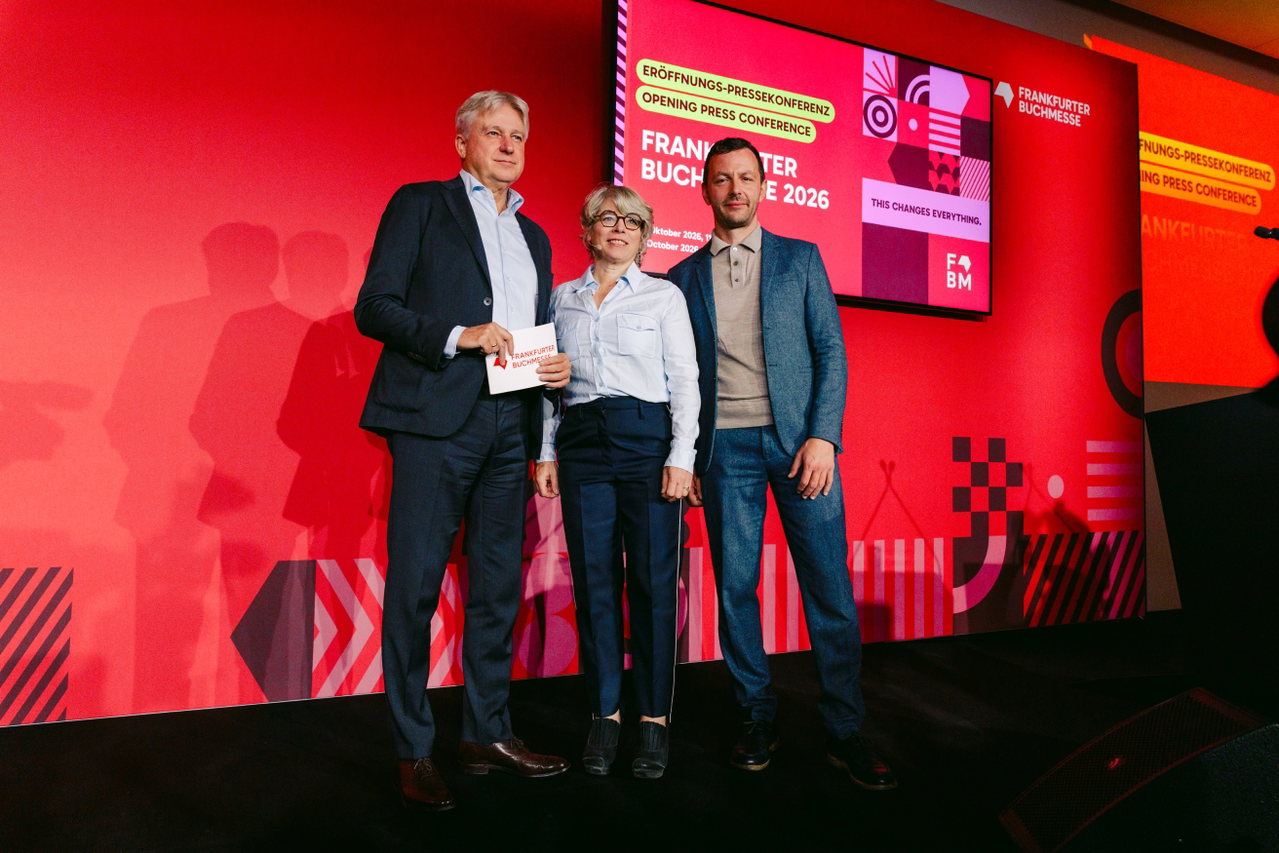
At the opening press conference of the 78th Frankfurter Buchmesse on 6 October, the American historian Jill Lepore did not offer publishers a to-do list. She offered them a frame: the books they make are the infrastructure of self-government, and that infrastructure has been swallowed whole by machines owned by a few corporations.

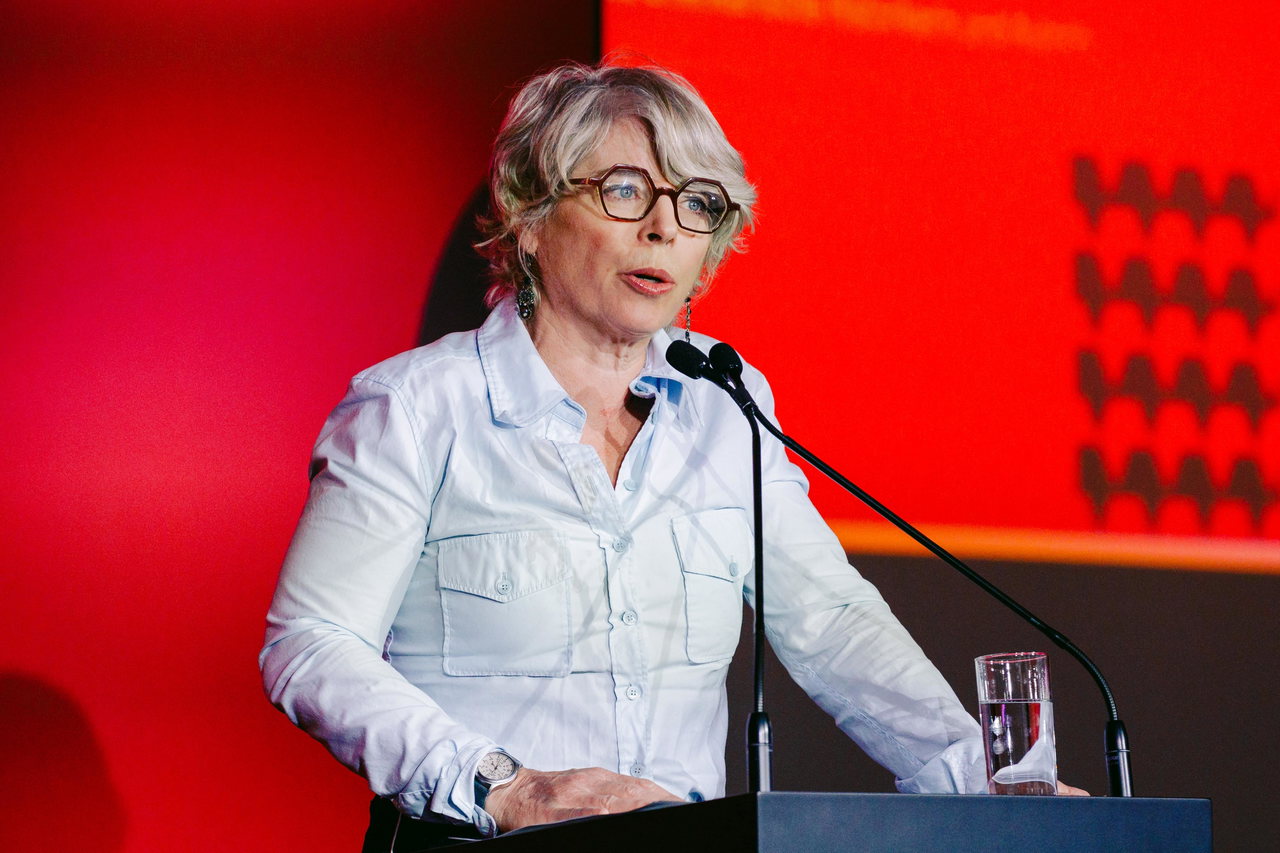
Published: 9.10.2026 | Foto / Video: Frankfurter Buchmesse
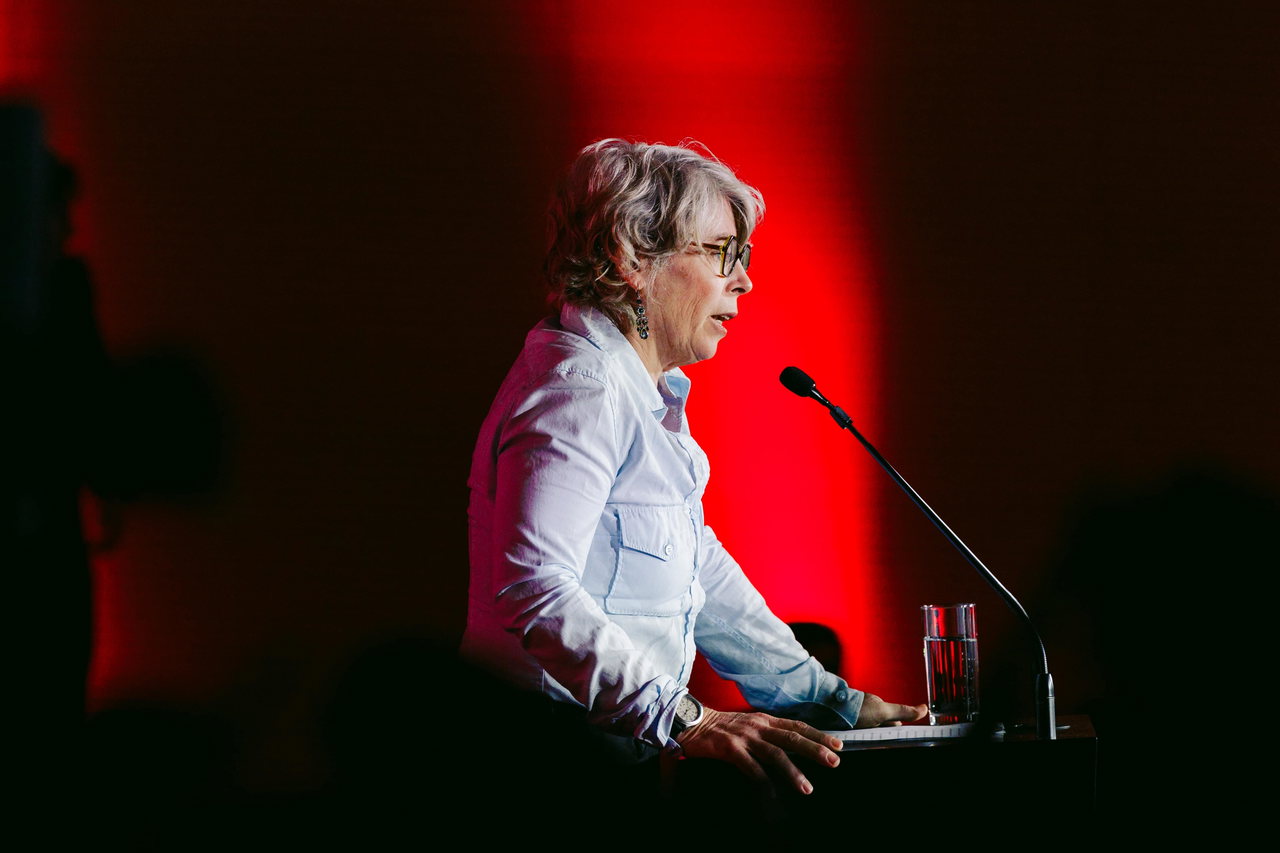
Lepore, a Pulitzer Prize winner and author of the new book The Rise and Fall of the Artificial State, spoke for about eleven minutes under the fair's motto, "This Changes Everything." Her address followed remarks by Sebastian Guggolz, chairman of the German Publishers and Booksellers Association, who warned that reading competence cannot be compensated by AI and called for "immediate intervention" by political leaders, without authors and publishers having to sue first.
„On the knife edge of history"
Lepore opened with the fair's 500-year tradition, then turned to the present: "we meet here this year on the knife edge of history." In her telling, the sum of human knowledge held in the world's books has been absorbed by corporate machines, and those corporations now propose that the machines do our reading, writing and even thinking: "The sum of human knowledge that is contained in the world's books has been swallowed whole by machines owned by corporations that propose that these intelligent machines ought to do the work of reading and writing and even of thinking for us."
She granted the promise of the technology, including the discovery of new knowledge. But she argued that its development threatens the arts and letters, freedom of thought and democratic societies. For an industry whose raw material is exactly that body of knowledge, the diagnosis is blunt: the corpus is the asset, and it has already been taken.
The "Artificial State"
Lepore traced the idea back to Hannah Arendt in the 1950s, who feared that automation, like totalitarianism, would render humans superfluous. The Dartmouth workshop of 1956, where the term "artificial intelligence" was settled on, set the research agenda that followed.
Her name for the resulting dream is the Artificial State: less a state than the fantasy of living without one, of cutting humans off from nature and from each other. Its most extreme form, she said, is the plan of a few billionaires to upload their consciousness to computers. For everyone else, it means being ruled, and in many cases replaced, by machines owned by corporations owned by those same people. Her question to the audience was whether we risk losing "not only our freedom, but also our minds."
Why this is a publishers' issue
The link to the book trade is her argument about democracy. Constitutional government, she said, "depends on books and on reading, on writers and printers, on the freedom of the human mind," and no democracy can thrive without a literate electorate. She called that inheritance "as precious as it is precarious."
She was candid about democracy's flaws. But she argued that, historically, rule by unchecked power is the norm and liberal democracy the exception, and that what is now emerging is worse. The authors of the US Constitution, she noted, bet that people can govern themselves "by reflection and choice rather than being ruled by accident and force." Publishers are the ones who make that reflection possible at scale.
A declaration of independence
Lepore closed by rewriting the US Declaration of Independence, which turned 250 this year. The question, she said, has returned in revised form: "Are we to allow machines to do our reading and writing and thinking for us?" Her answer was to declare independence "in the writing and reading of books," because "our thoughts and our words and our books are our own," and consent to any system of government is ours to give or withhold.